
A counterbalance forklift training course is a specialised program designed to teach operators how to safely and efficiently handle one of the most commonly used forklifts in warehouses, construction sites, and logistics facilities. These forklifts use a weight at the rear to counterbalance heavy loads at the front, making them versatile but potentially hazardous without proper training. Understanding how these machines work, along with safety procedures and operational techniques, is essential for both employers and workers aiming to maintain a productive and risk-free workplace.
A comprehensive Forklift Training Course typically begins with the fundamentals, ensuring that learners understand the core principles of forklift operation. This includes how forklifts function, different types of forklifts, and the environments in which they are commonly used. In particular, trainees are introduced to forklift basics such as steering mechanisms, lifting capacities, load balancing, and visibility limitations.
Beyond simple operation, the course also introduces concepts related to material handling training, which focuses on how to transport goods efficiently while minimising damage and risk. This foundational knowledge is essential for building confidence and competence, especially for beginners entering warehouse or industrial roles. By mastering these basics, operators can avoid common mistakes that lead to workplace incidents.
A counterbalance forklift training course typically combines theoretical learning with practical, hands-on experience. The theory component covers workplace safety laws, hazard identification, and safe operating procedures. Trainees learn about load charts, stability triangles, and the importance of maintaining balance while lifting or transporting goods.
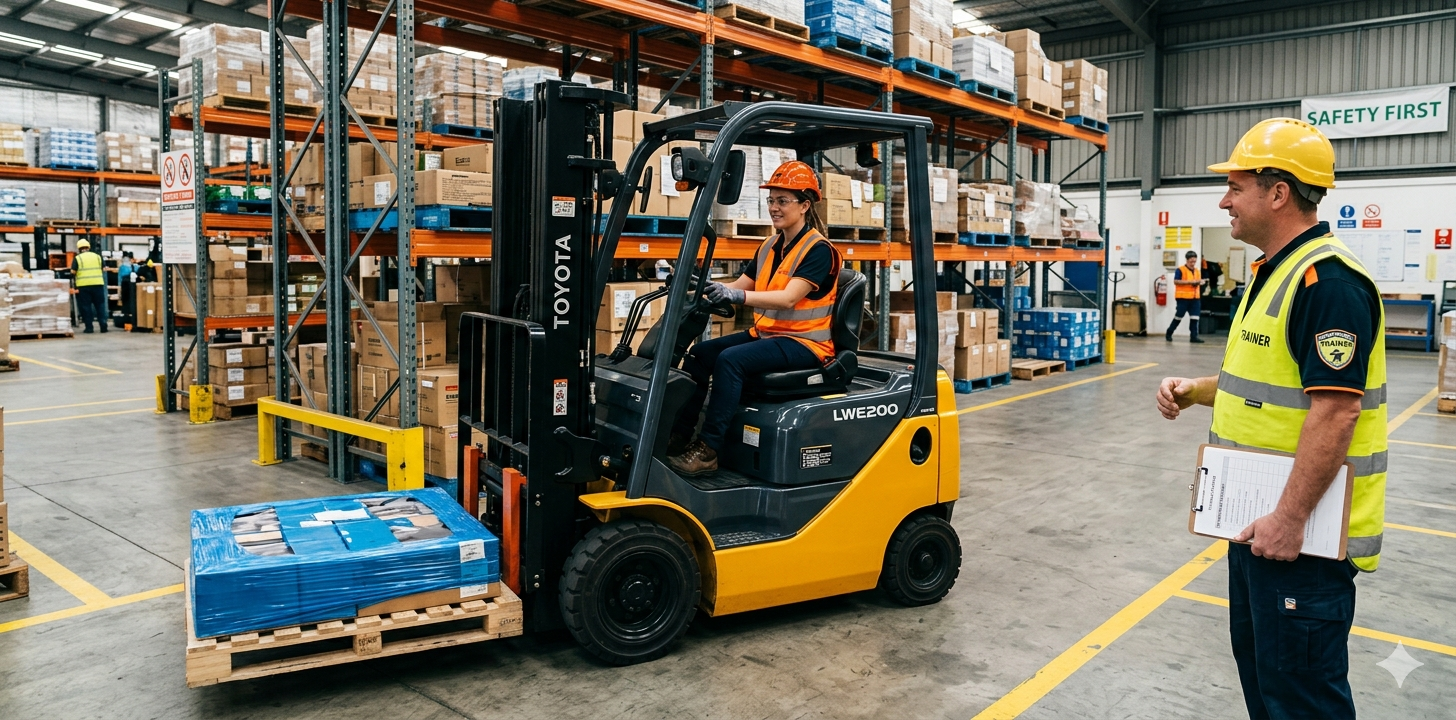
On the practical side, participants operate forklifts under supervision, practising manoeuvres such as stacking, reversing, and navigating tight spaces. This hands-on training is critical in reinforcing classroom knowledge and building real-world skills. Additionally, courses often include assessments to ensure participants meet competency standards before receiving their safety certification.
Within warehouse forklift training, several modules are designed to prepare operators for real-life scenarios. These modules often include equipment inspection, where learners check for faults before operation, and load handling techniques to ensure stability and prevent tipping.
Another important aspect is hazard awareness. Operators are trained to identify risks such as uneven surfaces, pedestrian traffic, and improper load placement. This level of awareness is crucial for maintaining a safe working environment and reducing the likelihood of accidents. Such structured learning ensures operators are not just skilled but also responsible in their roles.
Workplace safety is a top priority in industries that rely on heavy machinery, making forklift safety training essential. Forklifts, while highly efficient, can be dangerous if operated incorrectly. Accidents can result in serious injuries, damaged goods, and costly downtime for businesses.
Proper training ensures operators understand how to control the forklift, maintain stability, and follow safety protocols. It also teaches them how to respond in emergencies, such as equipment failure or unexpected obstacles. Employers benefit from reduced liability and improved productivity, while employees gain the confidence to perform their tasks safely and efficiently.
Counterbalance forklift operator training focuses specifically on the unique design and handling characteristics of counterbalance forklifts. Unlike other types, these forklifts require careful attention to balance and load distribution, as improper handling can easily lead to tipping.
This specialised training helps operators understand the importance of maintaining the correct centre of gravity and using the forklift within its rated capacity. By focusing on these critical aspects, the training reduces the risk of accidents and ensures smoother operations in busy work environments.
In many industries, obtaining a counterbalance forklift certification Canada is not just beneficial but mandatory. Certification ensures that operators meet industry standards and are legally permitted to operate forklifts in their workplace. It also demonstrates a commitment to safety and professionalism.
Courses designed for forklift training Canada align with national safety regulations and guidelines, ensuring that participants receive up-to-date and relevant training. Certification typically involves both written and practical assessments, verifying that the operator has the knowledge and skills required to perform safely. This formal recognition can also improve job prospects and career growth opportunities for individuals in the logistics and construction sectors.
Earning a recognised safety certification can significantly enhance an individual’s employability. Employers often prefer certified operators because they require less supervision and are more likely to adhere to safety standards. This not only reduces training costs for employers but also ensures a safer workplace overall.
For workers, certification can open doors to higher-paying roles and increased responsibilities. It serves as proof of competence and dedication, making it a valuable asset in competitive job markets.
Completing a counterbalance forklift training course offers numerous benefits beyond basic operational skills. One of the most significant advantages is improved workplace safety. Trained operators are less likely to make errors that could lead to accidents, ensuring a safer environment for everyone.
Another key benefit is increased efficiency. Skilled operators can handle loads more quickly and accurately, reducing delays and improving overall productivity. Additionally, proper training helps extend the lifespan of equipment by minimising wear and tear caused by improper use.
From an organisational perspective, investing in training can lead to reduced insurance costs, fewer workplace incidents, and better compliance with safety regulations. These advantages make forklift training a worthwhile investment for both individuals and businesses.
Effective material handling training plays a crucial role in streamlining operations. Trained operators understand how to position loads correctly, optimise storage space, and reduce handling time. This level of efficiency is particularly important in high-demand environments such as warehouses and distribution centres.
By applying the skills learned during training, operators can contribute to smoother workflows and improved inventory management. This not only benefits the organisation but also enhances job satisfaction for workers who can perform their tasks more confidently and effectively.
Selecting the right Forklift Course is an important step for anyone looking to enter or advance in the industry. Factors to consider include the course content, training methods, and certification requirements. It is essential to choose a program that offers both theoretical knowledge and practical experience.
Additionally, learners should look for courses that cover a wide range of topics, including warehouse forklift training, safety procedures, and equipment maintenance. A well-rounded course ensures that participants are fully prepared to handle real-world challenges and meet industry expectations.
As industries continue to grow and evolve, the demand for skilled forklift operators is increasing. With this growth comes a greater emphasis on safety and efficiency, making proper training more important than ever. Employers are prioritising candidates who have completed recognised training programs and hold valid certifications.
Training not only ensures compliance with regulations but also fosters a culture of safety within the workplace. When operators are well-trained, they are more likely to follow best practices and contribute to a positive working environment. This collective effort helps reduce accidents and improve overall performance.
Choosing a reliable training provider is a crucial step in gaining the skills and knowledge needed to operate forklifts safely. Organisations like CN Forklift Training focus on delivering structured programs that combine theory with practical experience, helping learners build confidence and competence in real-world scenarios. Their approach ensures that participants are well-prepared to meet industry standards without overwhelming them with unnecessary complexity.
By enrolling in a course offered by CN Forklift Training, individuals can gain valuable insights into safe operation, compliance, and efficiency. Whether you are starting a new career or upgrading your skills, a well-designed training program can make a significant difference. With the support of experienced providers like CN Forklift Training, achieving certification and workplace readiness becomes a more accessible and rewarding journey.
Don't see your city? We provide on-site training throughout Ontario. Contact us for availability.